Short answer
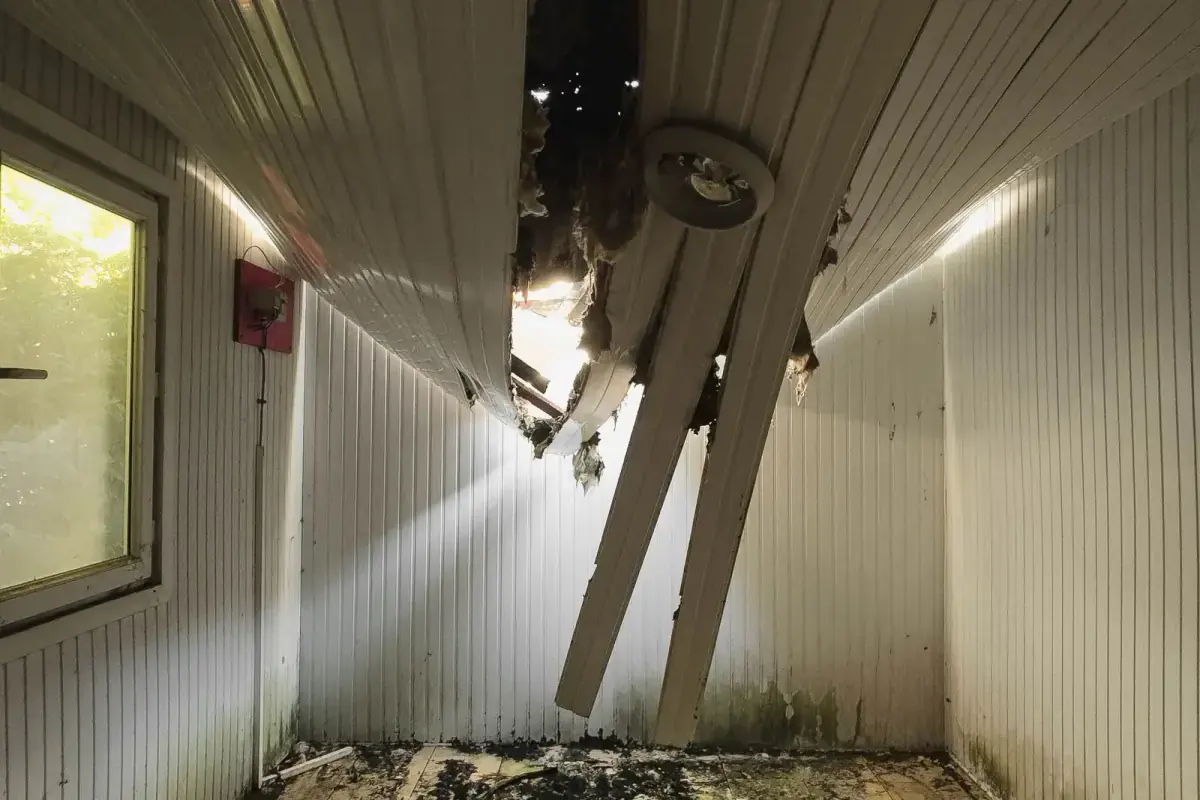
Stop the leak, keep people out from under a sagging ceiling, and dry the area completely. Small, firm stains can be sealed with a stain-blocking primer and repainted; soft, sagging or crumbling drywall or plaster has to be cut out and replaced after the framing and insulation above are dry.
Step 1: Make it safe
A ceiling holding water can collapse. If it's bulging, keep everyone out of the room, turn off power to fixtures in that ceiling, and put a bucket under the lowest point. Poking a small hole at the center of the bulge lets water drain in a controlled way; only do this if you can reach safely and there's no electrical fixture nearby.
Step 2: Find the source
Ceiling leaks come from roofs, plumbing and bathroom fixtures above, HVAC condensate lines and ice dams. The stain is not always directly under the leak; water travels along joists before it drips.
Step 3: Dry it
Wet insulation above a ceiling holds water against the drywall and usually needs to come out. Air movers and dehumidifiers dry the cavity; moisture readings confirm when it's done.
Step 4: Repair
See ceiling leak water damage for what a crew does.
- Firm, dry stain: clean, seal with an oil- or shellac-based stain blocker and repaint.
- Soft or sagging drywall: cut back to solid material and framing, patch or replace the panel, tape, mud and texture.
- Plaster: small areas can be patched; larger failures may be covered with drywall or repaired by a plaster specialist.
How to tell when the ceiling is really dry
A ceiling can look dry on the surface while the framing and insulation above it are still wet, so do not judge by appearance alone. Press the drywall gently: it should feel firm, not soft or spongy. A moisture meter reading should sit close to the reading of a dry ceiling in the same house — a crew compares the two rather than trusting one number. Watch for the stain darkening again over a few days, paint bubbling, or a musty smell, all of which mean water is still present. Do not repaint until the area is dry and the leak is fixed, or the stain will bleed through the new paint.
When a ceiling leak is a bigger problem
Call a professional when the stain keeps coming back after a repair, when the ceiling sags more over days, when joists or plaster feel soft, or when you can smell mold in the room above or below. A leak that returns after a roof or plumbing fix may be coming from a second source, and water traveling along joists can hide the real entry point. A crew can open a small inspection area, check the cavity with a moisture meter, and tell you whether the framing and insulation are sound before you spend money on a cosmetic repair.
Questions
Can a water-damaged ceiling dry on its own?
A small, one-time drip on drywall with no insulation above may. Soaked insulation or repeated leaks won't dry properly without removal and dehumidifiers, and mold can grow in the meantime.
Can I just paint over a water stain on the ceiling?
Only after the leak is fixed and the ceiling is dry. Regular paint lets the stain bleed through; use a stain-blocking primer first.
How long does a water-damaged ceiling take to dry?
A small one-time drip can dry in a few days. Soaked drywall or wet insulation above the ceiling usually takes three to five days with air movers and a dehumidifier, and longer in cold weather. Do not repair or repaint until moisture readings are back to normal.
This guide is general information, not professional, legal or insurance advice. Follow your insurer's instructions and local codes, and put safety first.