Short answer
Water damage shows up as yellow or brown stains, bubbling or peeling paint, soft or swollen drywall, warped or cupped flooring, a musty smell and mold spots. A new leak is usually damp, soft and spreading; old damage is dry, often has several darker rings and may show mold or rot.
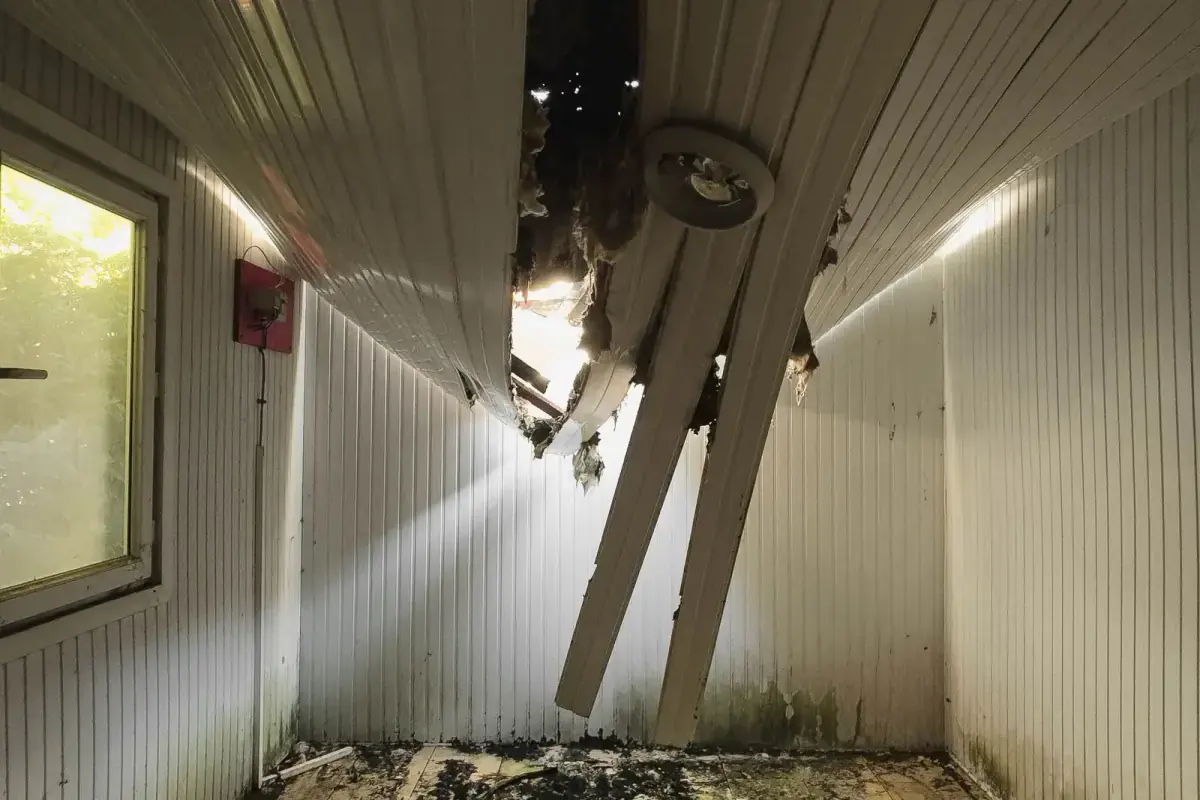
Signs on walls and ceilings
- Yellow, brown or copper-colored stains, often with a darker ring at the edge
- Paint that bubbles, blisters or peels, and wallpaper that lifts
- Drywall that feels soft, crumbles or bows
- A sagging ceiling, or cracks spreading from a stain
Signs on floors and cabinets
- Hardwood that cups (edges higher than the center) or crowns
- Laminate or vinyl plank that lifts, separates or feels spongy
- Carpet that stays damp or smells musty
- Cabinet bases under sinks that swell, delaminate or stain
New leak or old damage?
A new leak usually feels damp or cold, is soft to the touch and gets larger over a day or two. A moisture meter reading well above the surrounding wall confirms it. Old damage is dry, stable in size and often has several rings from repeated wetting. Mold spots, rot or rust stains on fasteners suggest the area has been wet for a while. A restoration technician with a moisture meter and thermal camera can tell you if a stain is still active.
What to do if you find it
Find and stop the source first. If the area is wet, get drying started within 24 to 48 hours to prevent mold. See ceiling leak repair and the first 24 hours after water damage.
Questions
Can water damage be hidden behind walls?
Yes. Leaks inside walls may show only as a faint stain, peeling baseboard paint or a musty smell. Moisture meters and thermal cameras find it without opening the wall.
Is an old water stain a problem if it's dry?
Not necessarily, but confirm it's dry with a moisture meter and check for mold. If it's dry and clean, it can be sealed with a stain-blocking primer and painted.
This guide is general information, not professional, legal or insurance advice. Follow your insurer's instructions and local codes, and put safety first.